
This guide covers the technology scope of make-good in a Perth commercial tenancy: what typically has to come out, who is allowed to remove it, and the handbacks — credentials, documentation, base-building reinstatement — that landlords actually check. It extends our broader make-good obligations guide, which covers the lease mechanics.
This is general information from an integrator's perspective, not legal or compliance advice. Your lease and your lawyer determine your actual obligations.
Why technology gets missed in make-good scopes
Fitout builders think in walls and ceilings. When a defit is priced, "strip out" usually means partitions, joinery and finishes — and the assumption is that whatever is in the ceiling goes to the tip with the tiles. Three problems with that assumption:
- Some of it isn't yours to rip out. Base-building infrastructure — risers, backbone cabling, building security devices, fire detection — often runs through or beside your tenancy fitout. Demolition crews can't always tell the difference.
- Some of it can't legally be ripped out by just anyone. Telecommunications customer cabling is regulated work in Australia (more below).
- Some of it is a handback, not a removal. Access credentials, admin logins and documentation need to go back to the building in an orderly way — and that never appears on a demolition scope.
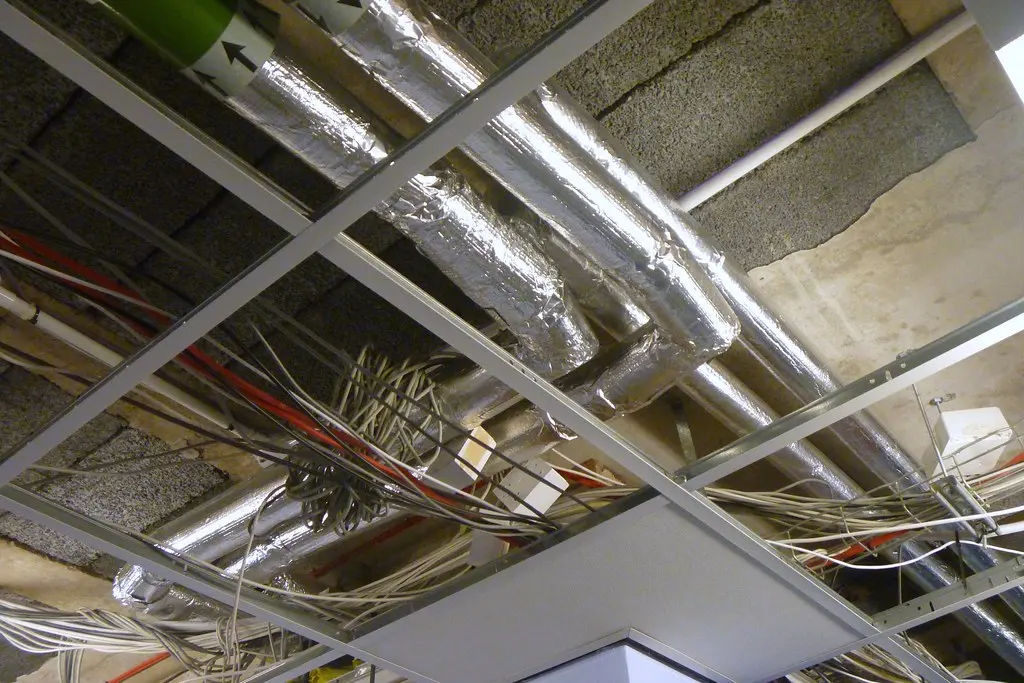
Cabling removal: the regulated part
Who is allowed to touch it
In Australia, cabling that connects — or is intended to connect — to a telecommunications network is regulated by the ACMA. Installation and maintenance of that cabling must be performed or supervised by a registered cabler under the Telecommunications (Cabling Provider) Rules 2025, which replaced the 2014 rules, and the work must comply with the current Wiring Rules, AS/CA S009:2020.
What that means at end of lease: your tenancy cabling terminates somewhere live — a patch panel in the comms room, a building distributor, a carrier lead-in. Disconnecting and removing it isn't just pulling dead wire; done wrong, it can disturb backbone cabling, other tenants' services or carrier infrastructure. Removal that involves disconnection from live network infrastructure should be performed or supervised by an ACMA-registered cabler, and the safest position for a tenant is simple: put a registered cabler on the defit, not a labourer with side-cutters.
What landlords typically require
Lease language varies, but the common patterns we see in Perth towers are:
- Full removal of tenancy cabling back to the point of connection with base-building infrastructure — ceilings left clear, no abandoned cable draped on the grid or in risers.
- Reinstatement of the comms room or building distributor: your patch panels, racks and cable management removed or handed back tidy, base-building terminations undisturbed.
- Evidence. Some building managers want confirmation that cabling work was done by registered cablers, and photos of cleared ceiling voids before reinstatement of tiles.
Abandoned cabling is the classic failed-inspection item. AS/CA S009 sets requirements around how customer cabling is installed and identified, and buildings increasingly refuse to accept dead cable left in risers and ceiling spaces — it accumulates, it's a housekeeping and fire-load concern, and eventually some future tenant pays to remove three fitouts' worth at once. If your lease says "remove", assume that means all of it, tagged ends included.
Security decommissioning: more than unscrewing readers
A tenancy security system touches the building in ways a demolition scope won't show:
- Physical removal. Readers, controllers, cameras, alarm panels and door hardware come out — but door strikes and maglocks often interact with base-building doors and fire egress hardware, which must be left compliant and functional, not just patched over.
- Lift and base-building integration. If your access system was integrated with lift destination control or building readers, that integration needs to be formally decommissioned with the building's contractor, not just powered off. An orphaned integration causes faults for the next tenant and support calls that trace back to you.
- Monitoring and services. Alarm monitoring, SIM services and software subscriptions attached to the tenancy should be cancelled in writing, with the monitoring centre told the site is decommissioned — otherwise the building gets phantom alarm events from a tenancy that no longer exists.
- Data. Recorders and controllers hold footage, credential databases and personal information about your staff. Decommissioning should include wiping or removing storage, not sending it to auction with the furniture.
The handback nobody scopes: credentials and documentation
At end of lease, the building will want back everything that opens its doors:
- Building access cards, fobs and keys issued to your staff over the term — including the ones issued to people who left three years ago. Start reconciling the register early; chasing departed employees for fobs in the final week is how bonds get dipped.
- Mobile credentials and PINs revoked at the building platform, not just deleted from your side.
- Admin access to any shared or integrated systems formally transferred or surrendered.
- Documentation: as-installed drawings, cabling records and anything the lease says forms part of the premises.
Do this as a checklist with the building manager and get sign-off in writing. It is the cheapest insurance in the whole defit.
AV de-rigging and everything on the walls
Screens, projectors, ceiling speakers, room booking panels and videoconference hardware all leave holes, mounts and cabling behind. The make-good question is rarely the equipment — it's the substrate: patched penetrations, structural fixings removed, in-wall and in-ceiling cabling stripped with the rest. If AV was part of an integrated fitout, check whether items like ceiling speakers were wired through the tenancy's regulated cabling — if so, they belong in the registered cabler's scope, not the demolition crew's.
What landlords require vs what fitout builders assume
| Item | Fitout builder's assumption | What the lease usually requires |
|---|---|---|
| Ceiling cabling | Goes out with the tiles | Removed by/under a registered cabler, back to base-building connection |
| Comms room | "Not our trade" | Tenant racks and panels removed, base building undisturbed, tidy handback |
| Security devices | Unscrew and patch | Formal decommissioning, integrations closed out, data wiped |
| Access credentials | Not considered | Full reconciliation and handback, mobile credentials revoked |
| Fire and egress hardware | Untouched | Left fully compliant after security hardware removal |
The pattern: builders assume removal is demolition; leases treat it as decommissioning. Pricing the difference before the defit starts is a lot cheaper than discovering it at inspection. Our office defit service scopes the technology package alongside the builder's works, and if you're moving rather than closing, the office relocation IT checklist covers what should move with you instead of being scrapped.
Scope the technology before the builder starts
If your lease end is on the horizon, get the technology scope priced alongside the strip-out — cabling removal, security decommissioning, credential handback and AV de-rig as one package with one point of accountability. Get a quote or book a tower audit and we'll walk the tenancy and put the whole technology make-good in writing. A tidy comms room handback is part of the same conversation.